

Cleaning Rowe furniture safely requires nothing more than a soft microfiber cloth, distilled water, and mild dish soap for wood surfaces, plus a vacuum with upholstery attachment for fabric components. This gentle three-ingredient approach preserves the hand-rubbed finishes and premium upholstery materials that make Rowe pieces a significant investment, typically lasting 15 to 20 years with proper care. The real secret lies in working with the grain on wood surfaces and never over-wetting fabric, two techniques that prevent the clouding, water spots, and fabric shrinkage that damage lesser furniture but can absolutely ruin a quality piece.
Most homeowners make the mistake of reaching for commercial wood polish or upholstery cleaners first, but Rowe’s furniture finishes respond best to the simplest solution. If you’ve invested in this Virginia-made brand (read our Rowe furniture review for more on quality and construction), you’re working with solid hardwoods and carefully applied catalyzed varnish or lacquer finishes that need protection, not heavy chemical treatment.
The process takes about 20 minutes per piece and requires no special skills. You’ll address dust, light soil, and everyday grime while maintaining the luster and integrity of both wood and upholstery. What matters most is understanding which materials you’re cleaning and matching your technique to Rowe’s specific construction methods.
Understanding Your Rowe Furniture Finish
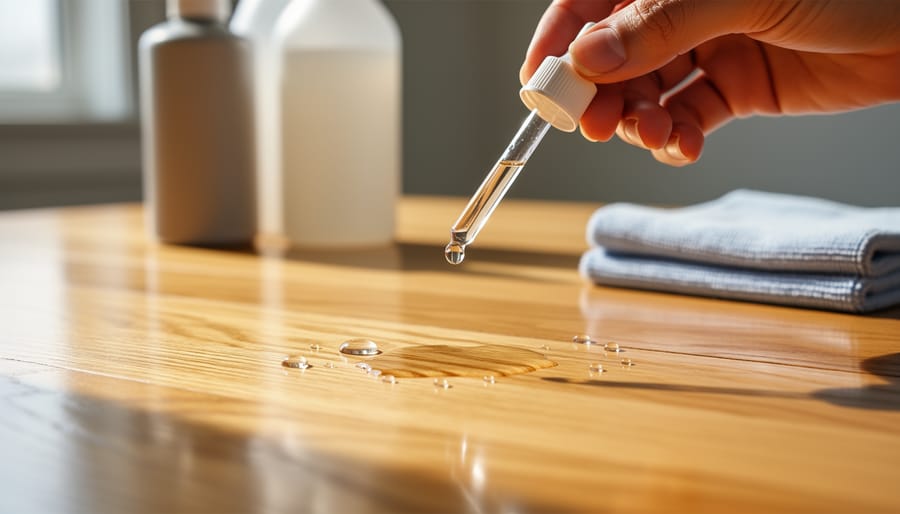
Before you clean any Rowe furniture piece, you need to know what type of finish protects the wood. Rowe uses several common finishes including lacquer, varnish, polyurethane, oil, and occasionally wax, each requiring different cleaning approaches. The wrong cleaner can cloud a lacquered surface, strip an oiled finish, or leave sticky residue on wax.
The simplest way to identify your finish is using water-drop testing on an inconspicuous spot. Place a small drop of water on the wood surface and watch what happens. If the water beads up and sits on top without being absorbed, your finish is likely lacquer, varnish, or polyurethane. If the water gradually soaks in or leaves a white mark, you probably have an oil or wax finish that offers less moisture protection.
For Rowe pieces with upholstery, check the fabric care tag usually stapled underneath the seat or along the frame. You’ll see codes: W means water-based cleaners are safe, S requires solvent-based cleaners, WS accepts either, and X means vacuum only. Knowing both your wood finish type and upholstery code prevents damage and guides you toward the right cleaning products for your specific piece.
What You’ll Need to Clean Rowe Wood Furniture
Gathering the right supplies before you start makes the cleaning process smoother and protects your Rowe furniture from accidental damage. You probably have several of these items around your home already, and the ones you need to buy are affordable investments that will last through many cleaning sessions.
Here’s what to collect before you begin:
- Three to four clean microfiber cloths (one for dusting, one for cleaning, one for buffing, and one spare)
- Distilled water in a spray bottle or bowl
- Mild dish soap or dedicated wood furniture cleaner (pH-neutral formulas work best)
- Soft-bristled brush or old toothbrush for detailed areas and carvings
- Vacuum with brush attachment for removing dust from crevices
- Optional: furniture polish or conditioning oil appropriate for your finish type
- Optional: cotton swabs for tight corners and decorative details
The microfiber cloths are non-negotiable because they trap dust instead of pushing it around and won’t scratch your finish like paper towels or rough rags can. Distilled water matters more than you might think since tap water contains minerals that can leave cloudy deposits on wood over time.
Skip anything labeled as an all-purpose cleaner, ammonia-based product, or furniture spray with silicone buildup. Avoid steel wool, scouring pads, or anything abrasive. Products containing bleach, acetone, or strong solvents will strip Rowe’s carefully applied finishes. When in doubt, gentler is always safer for quality furniture.
Safety Precautions Before You Begin
Before you touch your Rowe furniture with any cleaning product, take five minutes to set yourself up for success and protect both the piece and your home. These precautions prevent the most common cleaning disasters that can damage valuable furniture.
Start by opening windows or turning on a fan in the room where you’ll work. Even mild wood cleaners release fumes that can cause headaches or irritation in enclosed spaces, and proper airflow helps surfaces dry evenly. Place old towels or plastic sheeting under and around your Rowe piece to catch drips, hardwood floors and carpets don’t forgive water stains.
Always test your chosen cleaner on a hidden spot first: the underside of a table, the back leg of a chair, or an inside edge where no one looks. Apply a small amount, wait ten minutes, then check for discoloration, stickiness, or finish damage. If the test spot shows any adverse reaction, stop and try a different product or call a professional.
For Rowe pieces with upholstery, never let cleaning solution from the wood sections seep onto fabric or leather. The junction where wood meets upholstery is especially vulnerable: excess moisture can stain fabric, weaken adhesives, or cause the wood stain to bleed into light-colored materials. Keep a dry cloth handy to immediately blot any drips.
Know when to stop. If you notice the finish becoming tacky, colors bleeding, wood grain raising, or any cracking sounds, discontinue cleaning. These signs indicate you’re using the wrong product or technique for your specific Rowe finish, and continuing risks permanent damage that costs far more to repair than a professional cleaning would cost upfront.
Step-by-Step Cleaning Process for Rowe Wood Surfaces
Dusting and Initial Preparation
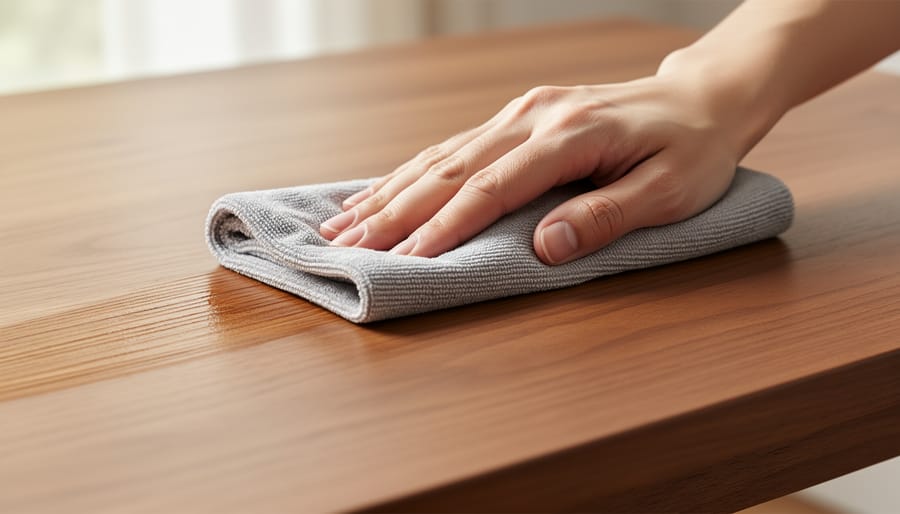
Start at the highest point of your Rowe piece, the top of a cabinet, the back crest of a chair, and work downward so falling dust doesn’t resettle on already-cleaned surfaces. Use a clean, dry microfiber cloth folded into quarters, which gives you multiple fresh faces as sections get dirty. Wipe with the wood grain in long, smooth strokes rather than circular motions that can trap particles and create fine scratches.
For carved details or crevices, switch to a soft-bristle brush, a clean paintbrush works perfectly, and gently sweep dust out before wiping. Don’t skip the underside of shelves or chair rungs where dust accumulates unseen. If your cloth starts dragging or feels gritty, refold to expose a clean section or grab a fresh one. This gentle first pass removes abrasive particles that would otherwise scratch during wet cleaning.
Applying and Working the Cleaner
Dip your microfiber cloth into the cleaning solution, whether you’re using commercial wood cleaner or vinegar cleaning mixtures, and wring it out thoroughly. The cloth should be damp, not wet. Excess moisture is the enemy here, as it can seep into joints, warp wood, or cloud the finish.
Work in sections about two feet square, always moving with the wood grain. Apply the cleaner using gentle, straight strokes rather than circular motions. Circular buffing can leave swirl marks on Rowe’s carefully applied finishes. If you encounter a stubborn spot, resist the urge to scrub harder. Instead, apply light pressure and make multiple passes, letting the cleaner do the work.
After cleaning each section, immediately follow with a dry microfiber cloth to remove any residue. Buff with long, even strokes in the grain direction until the surface feels dry to the touch and shows no streaking. These safe wood methods protect Rowe’s finish while removing grime effectively. Never let cleaning solution sit on the surface, work and dry each area before moving to the next.
Conditioning and Protecting the Finish
After cleaning your Rowe furniture, conditioning helps maintain the wood’s natural moisture and protects the finish from everyday wear. However, not all finishes need, or benefit from, regular conditioning.
For oil-finished Rowe pieces, apply a thin coat of furniture oil or wax every three to six months. Rub a small amount along the grain with a clean microfiber cloth, let it penetrate for 10-15 minutes, then buff away any excess. Lacquer and polyurethane finishes typically don’t require conditioning; these sealed surfaces only need occasional polish (two to three times yearly) to restore shine.
Skip conditioning if your furniture feels sticky after cleaning, that’s residue buildup, not dryness. When you do apply conditioner, less is more: a quarter-size amount covers a large tabletop. Work in small sections and always buff thoroughly to prevent cloudy film.
Avoid silicone-based products, which can create buildup that complicates future refinishing. Instead, choose beeswax-based or plant-oil formulas designed for fine furniture. These nourish the wood without creating problems down the road.
Cleaning Rowe Upholstery and Mixed-Material Pieces
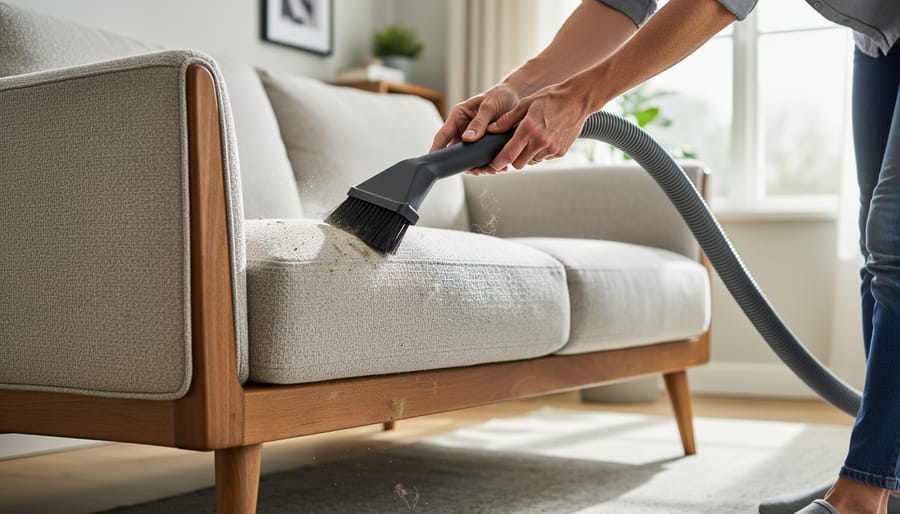
Many Rowe furniture pieces combine beautiful wood frames with fabric or leather upholstery, and each material needs its own approach. The key is protecting both surfaces while you clean, never let wood cleaner seep onto fabric, and keep upholstery solutions away from the finish.
Start by vacuuming the upholstery with a brush attachment, working from top to bottom and getting into crevices where the fabric meets the wood frame. Use your hand to feel along these junctions for trapped dust. For fabric upholstery, check the care tag (usually under the cushion) for the cleaning code: “W” means water-based cleaners are safe, “S” requires solvent-based products, “WS” accepts either, and “X” means vacuum only.
For spot cleaning, always test your chosen product on a hidden area first. Apply cleaner to your cloth, not directly to the fabric, and blot rather than rub. Work from the outside of the stain toward the center to prevent spreading. On leather Rowe pieces, use a dedicated leather cleaner and conditioner, never all-purpose sprays that can dry out the material.
- Fabric upholstery: Use a mild dish soap solution for “W” code fabrics, blotting gently
- Leather: Apply leather cleaner with a soft cloth, then condition to prevent cracking
- Microfiber: Rubbing alcohol on a white cloth lifts most stains without water rings
- Velvet or delicate weaves: Stick to vacuuming and professional cleaning for tough spots
Pay special attention where upholstery tacks or trim meet the wood. Use a dry soft brush to clean these areas, preventing moisture from getting under the fabric edge. If liquid does reach the wood-fabric junction, blot immediately with a clean, dry cloth and allow thorough air drying before replacing cushions.
How to Know Your Rowe Furniture Is Properly Cleaned
After following the cleaning steps, your Rowe furniture should exhibit several clear signs of proper care. The wood surface will appear evenly lustrous without streaks, feeling smooth and dry to the touch rather than sticky or tacky. Run your hand across the grain, there should be no residue transfer to your fingers, no rough patches, and no visible watermarks or cloudiness. The finish should reflect light consistently across the entire surface, and any hardware or trim should be free of cleaner buildup.
If you notice white haze, sticky spots, or uneven shine, you likely used too much product or didn’t buff thoroughly enough. Immediately rewipe the area with a barely damp microfiber cloth, then buff completely dry using circular motions. Dark spots or raised grain indicate water damage, stop cleaning and let the piece dry for 24 hours before assessing whether you need professional restoration. Any musty smell or dark patches requires immediate attention to remove mold before it spreads deeper into the wood.
Establish a maintenance rhythm to keep your Rowe pieces looking their best: dust weekly, perform a full cleaning monthly, and apply conditioning treatment quarterly. Mark these dates on your calendar so the work becomes routine rather than forgotten until visible dirt accumulates.
Common Rowe Furniture Cleaning Mistakes to Avoid
Even minor mistakes can damage Rowe furniture’s finish or create long-term problems that require professional restoration. The most frequent error is oversaturating wood surfaces with liquid cleaner or water. Many homeowners spray directly onto the furniture or use a dripping-wet cloth, which can seep into seams, loosen joints, cause veneer bubbling, and leave water marks that are nearly impossible to remove without refinishing.
Wrong product choices also cause serious damage. All-purpose cleaners, kitchen degreasers, ammonia-based window cleaners, and bleach-containing products strip protective finishes and discolor wood. Aggressive scrubbing with abrasive sponges, paper towels, or rough cloths scratches surfaces and wears through delicate lacquer or varnish layers.
Another common oversight is neglecting hidden areas where dust accumulates: under cushions, behind back panels, underneath the piece, and in carved details. These spots harbor grime that eventually spreads to visible surfaces. Community members have learned the hard way that skipping test spots before using new products can result in finish discoloration that affects the entire piece. Always test any cleaner on an inconspicuous area first, wait 24 hours, and check for adverse reactions before proceeding with the full cleaning.
Frequently Asked Questions About Cleaning Rowe Furniture
How often should I clean my Rowe furniture?
Dust your Rowe furniture weekly with a soft microfiber cloth, and perform a thorough cleaning with an appropriate wood cleaner every three to four months. High-traffic pieces or furniture in homes with pets may need monthly deep cleaning, while display pieces in low-use rooms can go six months between full cleanings.
What’s the best cleaner for Rowe wood furniture?
Murphy Oil Soap diluted with water works well for most Rowe finishes, or choose a pH-neutral wood cleaner specifically designed for furniture. Always test any product on a hidden area first, under an arm or on the back panel, and avoid all-purpose household cleaners that contain ammonia or silicone, which can damage the finish over time.
Can I use pledge or similar spray polishes on Rowe pieces?
Skip the spray polishes. They leave a waxy buildup that attracts dust and can create a cloudy film on your Rowe furniture’s finish. If you want to add shine, use a paste wax formulated for fine furniture once or twice yearly, applied sparingly and buffed thoroughly.
How do I remove water rings from my Rowe table?
Try rubbing the ring gently with a paste of baking soda and water, following the wood grain. For stubborn marks, apply mayonnaise to the ring, let it sit for several hours, then wipe clean and re-polish.
Does seasonal humidity affect how I should clean Rowe furniture?
Yes, use less moisture during humid summer months to prevent swelling, and consider a light conditioning treatment in dry winter when wood can become brittle.
When should I call a professional instead of cleaning it myself?
Contact a furniture restoration specialist if you see finish cracking or peeling, deep scratches exposing bare wood, or if a water spill has caused warping. Also seek professional help for valuable antique Rowe pieces.
For everyday spills, act fast. Blot liquids immediately with a clean cloth, working from the outside in to prevent spreading. Stubborn spots on upholstery respond well to a solution of one tablespoon white vinegar mixed with two cups water, dabbed gently with a cloth.
Regular, gentle cleaning is your best strategy for keeping Rowe furniture looking beautiful for decades. By following these steps, identifying your finish, using the right products, and working with care, you protect both the wood surfaces and any upholstery from premature wear and damage. A few minutes of attention every couple of weeks makes a genuine difference in preserving the craftsmanship that drew you to Rowe in the first place.
Your furniture is an investment in your home’s comfort and style. Treating it well means you’ll enjoy it longer and potentially pass it down as a cherished piece rather than something that needs replacement.
We’d love to hear how your cleaning project went. Did you discover your finish type? Find a technique that worked particularly well? Run into a challenge we can help troubleshoot? Share your experience in the comments below or ask any questions that came up during the process. Our community of homeowners has plenty of collective wisdom, and your insights might help someone else care for their Rowe pieces with confidence.
How to Create a 3D Kitchen Design in 6 Simple Steps
Cleaning Rowe furniture safely requires nothing more than a soft microfiber cloth, distilled water, and mild dish soap for wood surfaces, plus a vacuum with upholstery attachment for fabric components. This gentle three-ingredient approach preserves the hand-rubbed finishes and premium upholstery materials that make Rowe pieces a significant investment, typically lasting 15 to 20 years with proper care. The real secret lies in working with the grain on wood surfaces and never over-wetting fabric, two techniques that prevent the clouding, water spots, and fabric shrinkage that damage lesser furniture but can absolutely ruin a quality piece...