

Discovering mold on your treasured wooden pieces can feel alarming, but most furniture can be saved with prompt action and the right approach. Remove surface mold immediately by vacuuming loose spores outdoors with a HEPA-filter vacuum, preventing them from spreading throughout your home. Mix white vinegar with water in equal parts and apply it to affected areas with a soft cloth, as vinegar kills approximately 82% of mold species without damaging wood finishes. For stubborn growth, create a paste using baking soda and water, gently scrub the moldy spots, then wipe clean and dry thoroughly—moisture is mold’s best friend, so ensuring complete dryness is essential.
Before starting any cleaning process, assess whether the mold has penetrated deep into the wood grain or remains on the surface. Surface mold appears as fuzzy patches that wipe away relatively easily, while deeply embedded mold may require sanding or professional restoration. Always wear protective gloves, eyewear, and an N95 mask when handling moldy furniture, as spores can trigger respiratory issues and allergic reactions.
The good news? Most mold problems stem from preventable moisture issues, and proper wood furniture care can stop future growth entirely. This guide walks you through identifying mold severity, choosing safe cleaning methods for your specific situation, restoring your furniture’s beauty, and implementing prevention strategies that protect your investment for years to come.
Understanding Mold on Wood Furniture: What You’re Dealing With
Before you start cleaning wood furniture with mold, it’s essential to understand exactly what you’re facing. Mold is a type of fungus that releases microscopic spores into the air, seeking the perfect conditions to grow and thrive. When these spores land on your quality wood furniture, they can quickly establish colonies if the environment is right.
So what creates the perfect storm for mold growth on wood? The answer lies in three main factors: moisture, darkness, and poor air circulation. Wood is naturally porous and can absorb moisture from humid air, spills, or damp basements. When humidity levels exceed 60% and your furniture sits in a poorly ventilated space away from direct sunlight, you’ve essentially rolled out the welcome mat for mold. These moisture and humidity conditions create an ideal breeding ground that mold simply can’t resist.
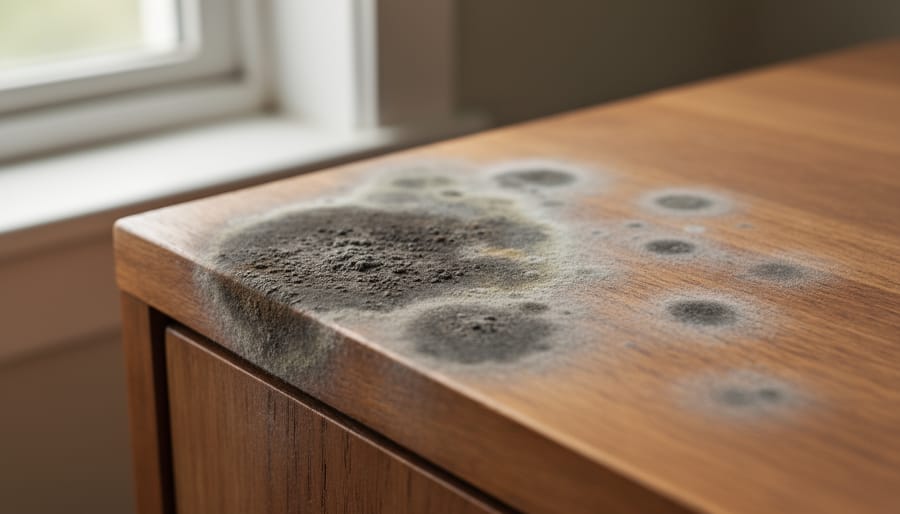
Identifying mold on your wooden pieces is usually straightforward. You’ll typically notice fuzzy patches in colors ranging from white and gray to green, black, or even orange. The growth often appears in clusters and may have a musty, earthy smell that’s hard to miss. Surface mold looks powdery and sits on top of the finish, while deeper infestations can penetrate the wood itself, causing discoloration and deterioration beneath the surface.
Assessing the severity of your situation is crucial before you begin any cleaning process. Light surface mold on finished wood is usually manageable with the right approach, while extensive growth that’s seeped into unfinished wood or structural areas presents a more serious challenge. Take a moment to examine your furniture closely—understanding what you’re dealing with will help you choose the most effective cleaning method and determine whether this is a project you can tackle yourself or if it’s time to call in the experts.
Safety First: Protecting Yourself During Mold Removal
Before you start cleaning wood furniture with mold, protecting yourself should be your number one priority. Mold spores can cause respiratory irritation, allergic reactions, and other health issues, so proper safety measures aren’t optional—they’re essential.
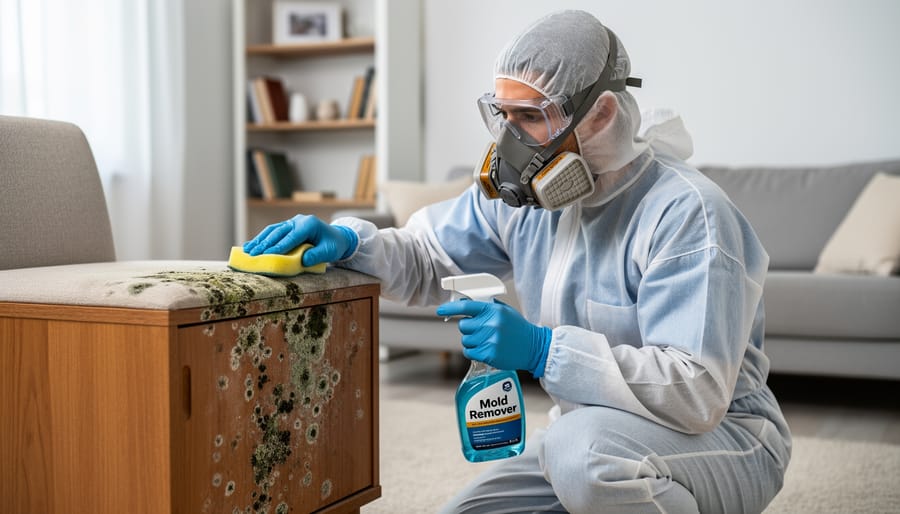
Start by gathering the right protective equipment. You’ll need rubber or nitrile gloves to prevent skin contact with mold and cleaning solutions. A well-fitting N95 respirator mask is crucial for filtering out mold spores that become airborne during cleaning. Don’t rely on basic dust masks—they won’t provide adequate protection. Safety goggles or protective eyewear will shield your eyes from both mold spores and any cleaning solutions that might splash.
Ventilation is absolutely critical when cleaning moldy wood furniture. According to OSHA mold safety guidelines, proper airflow helps reduce spore concentration in the air. Work outdoors whenever possible, or move your furniture to a garage with open doors. If you must work indoors, open all windows and doors, and position fans to direct airflow outside—never toward other rooms in your home.
If you have asthma, allergies, or any respiratory condition, consider having someone else tackle the job. Those with compromised immune systems should definitely avoid mold cleanup entirely and consult professionals instead.
One expert tip from experienced furniture restorers: never use a regular vacuum on moldy furniture, as this just spreads spores throughout your home. And here’s something our community members emphasize—if you feel dizzy, nauseous, or have difficulty breathing while cleaning, stop immediately and get fresh air. Your health is more valuable than any piece of furniture.
Preparing Your Wood Furniture for Mold Cleaning
Before you begin cleaning wood furniture with mold, proper preparation is essential for both your safety and achieving the best results. Taking these initial steps will make the cleaning process more effective and protect you from harmful mold exposure.
First, relocate your moldy furniture outdoors if possible. Fresh air and natural sunlight not only provide ideal ventilation but also help prevent mold spores from spreading throughout your home. If outdoor space isn’t available, choose a well-ventilated area like a garage with open doors or a room with windows you can keep wide open. This step is crucial because disturbing mold releases spores into the air.
Here’s your preparation checklist:
- Move the furniture to your chosen well-ventilated location, handling it carefully to minimize spore dispersal.
- Lay down protective tarps or plastic sheeting underneath and around the furniture to catch falling mold particles.
- Put on your safety gear including gloves, safety glasses, and a well-fitting mask to protect yourself from spore inhalation.
- Use a vacuum with a HEPA filter to gently remove loose surface mold. Regular vacuums will just blow spores back into the air, but HEPA filters remove mold spores effectively. Work slowly and deliberately, avoiding aggressive scrubbing at this stage.
- Test your chosen cleaning solution on a hidden spot—like the underside or back of the furniture—to ensure it won’t damage the finish or discolor the wood.
Many homeowners skip that testing step and regret it later! Wait about fifteen minutes after applying your test solution to check for any adverse reactions. If the wood looks fine, you’re ready to tackle that mold with confidence.
Effective Methods for Cleaning Mold from Wood Furniture
The Vinegar Solution Method
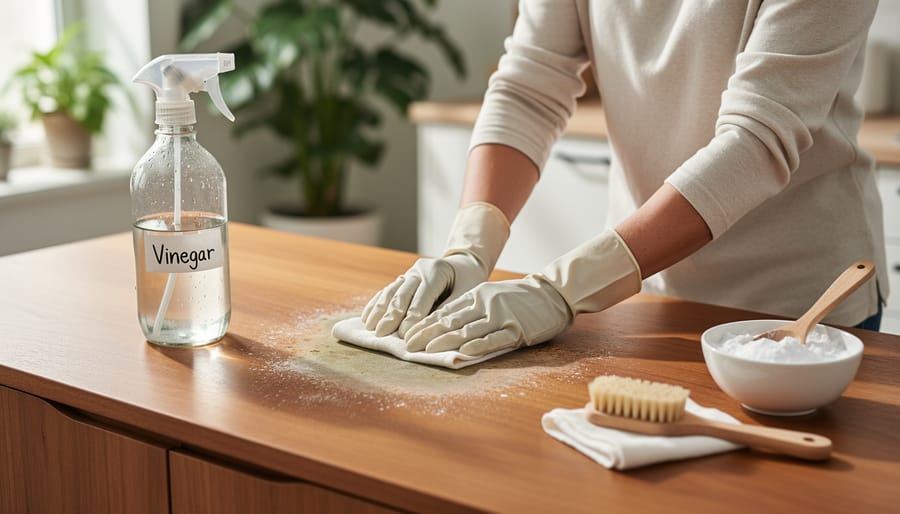
White vinegar is one of the most effective natural solutions for cleaning wood furniture with mold, and chances are you already have it in your kitchen! This gentle yet powerful antifungal agent kills up to 82% of mold species without harsh chemicals, making it perfect for your treasured wooden pieces.
Start by preparing your vinegar solution. For most mold situations on wood furniture, undiluted white vinegar works best. However, if you’re concerned about the wood’s finish, you can mix equal parts white vinegar and water for a gentler approach.
- Pour the vinegar solution into a clean spray bottle for easy application.
- Lightly spray the moldy areas of your furniture, being careful not to oversaturate the wood.
- Let the solution sit for at least one hour to penetrate and kill the mold spores effectively.
- Use a soft, clean cloth to wipe away the vinegar and dead mold, working in the direction of the wood grain.
- For stubborn spots, gently scrub with a soft-bristled brush before wiping clean.
After cleaning, allow your furniture to air dry completely in a well-ventilated area. Don’t worry about the vinegar smell—it will dissipate as the piece dries, typically within a few hours.
Many homeowners in our community have found this method incredibly effective for minor to moderate mold problems. If you’re still seeing mold after two treatments, it may be time to try a stronger approach or consult a professional.
Dish Soap and Water for Light Mold
For light surface mold that hasn’t deeply penetrated your wood furniture, a simple dish soap and water solution often does the trick. This gentle approach is perfect when you’ve caught the problem early and want to tackle cleaning wood furniture with mold without harsh chemicals.
Start by mixing just a few drops of mild dish soap—nothing fancy needed—into a bowl of warm water. You’re aiming for a barely sudsy mixture, not a bubble bath. Too much soap can leave residue that actually attracts more dirt and moisture later.
Dip a soft cloth into your solution and wring it out thoroughly. Here’s the key: your cloth should be damp, not dripping wet. Excess water is wood’s enemy and can cause warping or water stains. Gently wipe the moldy areas using circular motions, working with the wood grain rather than against it.
Once you’ve cleaned the surface, immediately follow up with a dry, clean cloth to remove any remaining moisture. This step is crucial—don’t skip it! Let the furniture air dry completely in a well-ventilated area, ideally for 24 hours.
This method works wonderfully for minor mold issues, but if the mold returns quickly or appears embedded in the wood, you’ll need a stronger approach.
Baking Soda Paste for Stubborn Spots
When vinegar or oil soap isn’t quite cutting through stubborn mold stains on your wood furniture, a gentle baking soda paste can work wonders without harming the finish. This method is perfect for those persistent spots that need a bit more cleaning power.
To create your paste, mix three parts baking soda with one part water in a small bowl. You want a consistency similar to toothpaste—thick enough to stay put but spreadable. If it’s too runny, add more baking soda; too thick, add a few drops of water.
Apply the paste directly to the moldy areas using a soft cloth or your fingertips. Let it sit for 5-10 minutes to penetrate the stain. Here’s where technique matters: use a soft-bristled toothbrush or cloth to gently scrub in circular motions, following the wood grain. Think massage, not attack—you’re coaxing the mold out, not scraping the finish off.
For delicate antique pieces, test this method on an inconspicuous spot first. Once you’ve worked the paste around, wipe it away with a damp cloth, then immediately dry the area thoroughly. The mild abrasiveness of baking soda lifts mold while being gentle enough for most wood finishes, making it a homeowner’s secret weapon for cleaning wood furniture with mold issues.
Commercial Wood Cleaners with Mold-Fighting Properties
When cleaning wood furniture with mold using natural methods doesn’t quite do the trick, commercial mold removers designed for wood surfaces can be your next best option. These specialized products are particularly helpful when dealing with stubborn mold growth or when you need a more powerful solution.
The key is choosing furniture-safe products specifically formulated for wood. Look for cleaners labeled as suitable for finished or unfinished wood furniture, depending on what you’re treating. Avoid harsh bleach-based products that can damage wood fibers, strip finishes, or cause discoloration. Instead, opt for oxygen-based or enzyme cleaners that target mold without harming the wood beneath.
Before purchasing any commercial product, read the label carefully. Quality mold removers will clearly state they’re safe for wood and list any precautions. Check whether the product works on your specific wood type and finish. Some are designed for bare wood, while others suit sealed or varnished surfaces.
Always follow manufacturer instructions to the letter. These directions aren’t just suggestions—they’re tested guidelines ensuring both effectiveness and safety for your furniture. Pay attention to recommended application times, ventilation requirements, and whether the product needs rinsing.
Expert tip from professional furniture restorers: test any commercial cleaner on a hidden spot first, even if it claims to be wood-safe. This simple step can prevent irreversible damage to visible areas.
Drying and Restoring Your Wood Furniture After Cleaning
After cleaning wood furniture with mold, proper drying is absolutely essential—skipping this step could invite mold right back into your home. Once you’ve finished cleaning your wooden furniture pieces, wipe down all surfaces with clean, dry cloths to remove excess moisture. Place the furniture in a well-ventilated area, preferably outdoors on a dry, sunny day, or near open windows with good air circulation.
Allow at least 24 to 48 hours for thorough drying. This waiting period isn’t just a suggestion—it’s your best defense against mold returning. Any trapped moisture in the wood’s pores creates the perfect environment for spores to regrow. You can speed up the process by using fans pointed at the furniture or running a dehumidifier in the room.
Once completely dry, assess your furniture’s condition. The cleaning process may have stripped some of the wood’s natural oils and protective finish, leaving it looking dull or dry. This is the perfect time to restore its beauty and add protection.
For unfinished wood, apply a quality wood oil like tung or linseed oil, rubbing it in with a soft cloth following the grain. For finished pieces, use furniture polish or paste wax to restore luster and create a protective barrier. Apply thin, even coats and buff gently with a clean cloth.
This restoration step does more than improve appearance—it seals the wood surface, making it harder for moisture and mold spores to penetrate in the future. Your furniture will emerge looking refreshed and better protected against future mold issues.
Preventing Mold from Returning to Your Wood Furniture
Once you’ve successfully cleaned mold from your wood furniture, you’ll want to make sure it never makes an unwelcome return. The good news? Keeping mold away is much easier than dealing with an active infestation.
Your first line of defense is controlling indoor humidity. Mold thrives in moisture, so aim to keep humidity levels between 30-50%. A simple hygrometer from your local hardware store helps you monitor this. If levels creep too high, consider using a dehumidifier in problem areas like basements or rooms with poor ventilation. During humid summer months, running your air conditioning helps maintain drier conditions throughout your home.
Where you place your furniture matters tremendously. Keep wooden pieces at least a few inches away from exterior walls, which tend to be cooler and collect condensation. Avoid positioning furniture directly against windows or in poorly ventilated corners where air can’t circulate freely. If you have a piece in your basement or a room prone to dampness, seriously consider relocating it to a drier area of your home.
Regular cleaning routines make a huge difference. Dust your wood furniture weekly with a dry microfiber cloth, and give it a gentle wipe-down with a barely damp cloth monthly. This removes the dust and organic matter that mold feeds on. Remember to dry surfaces thoroughly after cleaning.
Improving air circulation creates an environment mold hates. Open windows regularly when weather permits, use ceiling fans to keep air moving, and don’t overcrowd furniture against walls or in tight spaces. In particularly stubborn areas, a small fan can work wonders.
Community members often share that fixing small issues quickly prevents bigger problems. Address any water leaks, spills, or condensation immediately. One homeowner noted that simply moving a plant stand away from her antique dresser solved her recurring mold problem.
These straightforward prevention strategies protect your beautiful wood furniture for years to come.
When to Call a Professional or Replace the Furniture
While cleaning wood furniture with mold is often a manageable DIY project, some situations genuinely require professional expertise or might signal that it’s time to say goodbye to a beloved piece.
If you notice the wood feels soft, spongy, or crumbles when touched, the mold has likely caused structural damage that compromises the furniture’s integrity. Similarly, if mold has penetrated deep into the wood grain despite your cleaning efforts, or if you see black staining that won’t budge, the infestation may be too extensive for home treatment.
Valuable antiques deserve special consideration. These pieces often feature delicate finishes and irreplaceable furniture craftsmanship that can be permanently damaged by aggressive cleaning methods. A professional furniture restorer has specialized knowledge and tools to preserve both the piece’s value and historical integrity.
Health concerns should always take priority. If anyone in your household has respiratory issues, allergies, or compromised immune systems, professional mold remediation is the safer choice. Additionally, if the moldy area exceeds 10 square feet, the EPA recommends calling in professionals who have proper containment equipment.
Watch for persistent musty odors even after thorough cleaning. This often indicates hidden mold growth within joints, crevices, or beneath veneers that you simply can’t reach without disassembling the furniture.
Sometimes replacement makes more practical sense. If the furniture’s monetary value is low and professional cleaning costs would exceed replacement, investing in a new piece might be your best option. Consider this especially for particle board or laminate furniture, which doesn’t respond well to moisture-based cleaning and deteriorates quickly once mold takes hold.
Trust your instincts. If the project feels overwhelming or unsafe, there’s no shame in seeking professional help.
You now have everything you need to confidently tackle cleaning wood furniture with mold. Remember, catching mold early makes all the difference in saving your cherished pieces. Many wood furniture items can be completely restored with the right approach and a bit of elbow grease, so don’t assume a piece is ruined at first sight of those telltale spots.
The key to success lies in acting quickly when you notice mold, using appropriate cleaning methods for your furniture’s finish, and always prioritizing safety with proper ventilation and protective gear. Once you’ve conquered the mold problem, maintaining wood furniture at home means staying vigilant about humidity levels and regular inspections, especially in moisture-prone areas.
Have you dealt with mold on your wood furniture before? We’d love to hear about your experiences and any tips that worked for you. If you’re facing a particularly stubborn mold situation or have questions about your specific furniture piece, drop a comment below. Our community of home improvement enthusiasts is here to help, and your insights might be exactly what another reader needs to hear. Together, we can keep our beautiful wood furniture looking its best for years to come.
Bolgatti Furniture Review: Is This Toronto Wholesaler Worth Your Money in 2026?
Discovering mold on your treasured wooden pieces can feel alarming, but most furniture can be saved with prompt action and the right approach. Remove surface mold immediately by vacuuming loose spores outdoors with a HEPA-filter vacuum, preventing them from spreading throughout your home. Mix white vinegar with water in equal parts and apply it to affected areas with a soft cloth, as vinegar kills approximately 82% of mold species without damaging wood finishes. For stubborn growth, create a paste using baking soda and water, gently scrub the moldy spots, then wipe clean and dry thoroughly—moisture is mold’s best friend, so ...